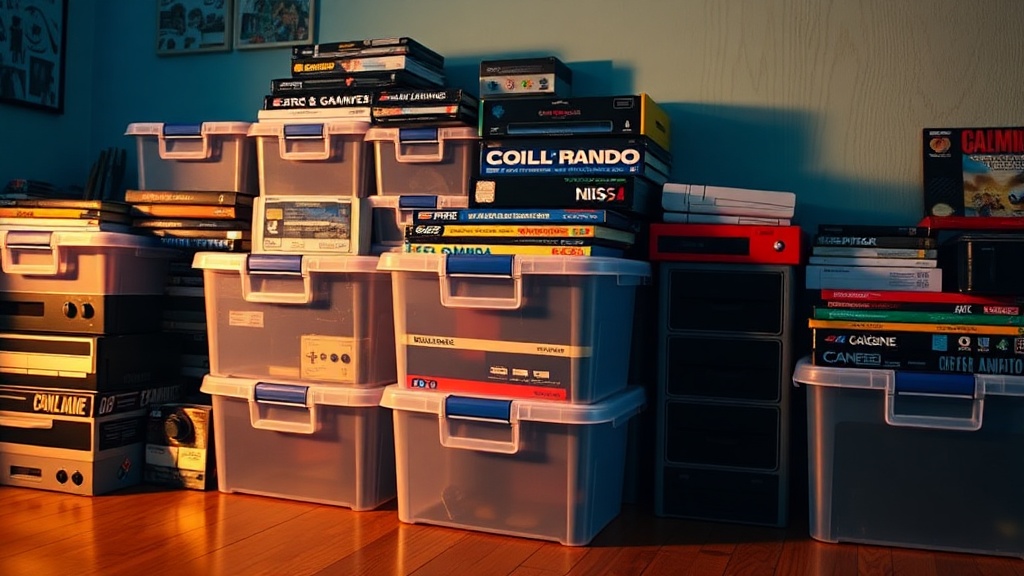
Why Plastic Bins Are Ruining Your Retro Game Collection

What Makes Game Boxes Worth Preserving?
Most collectors think they're protecting their vintage games when they slide cartridge boxes into plastic storage bins—sealed tight, stacked in closets, safe from dust and light. But here's what actually happens: trapped moisture condenses on box interiors. Paper labels warp against rigid plastic. Air circulation stops entirely, creating micro-environments where mold spores wake up and thrive. That "safe" storage method you've been using might be accelerating deterioration instead of preventing it.
The misconception runs deep. We associate plastic containers with preservation—after all, museums use archival materials. But your average Rubbermaid tote from the hardware store bears no resemblance to museum-grade storage. Those bins off-gas volatile organic compounds that yellow paper and degrade cardboard fibers over time. Worse, they create temperature differentials that pull moisture into every crevice of your carefully assembled collection.
Preserving vintage game packaging matters for reasons beyond aesthetics. Original boxes and manuals dramatically affect resale value—a loose EarthBound cart might fetch $200, but the complete-in-box version regularly sells for over $1,500. More importantly, box art represents a unique art form: the pixel-perfect illustrations, foil stamps, and embossed lettering that defined gaming's golden eras. Once degraded, these materials cannot be restored to original condition.
What's the Best Way to Store Cartridge Boxes Long-Term?
Start with the environment. Your storage room should maintain relative humidity between 30% and 50%—anything higher invites mold, anything lower desiccates paper and makes plastic brittle. Temperature stability matters more than the exact number; fluctuations cause expansion and contraction that stress seams and corners. Basements and attics? Usually terrible choices unless climate-controlled. A closet in your main living space often works better than that "perfect" storage room above the garage.
For the boxes themselves, ditch the plastic bins entirely. Instead, use acid-free archival boxes—the kind museums actually use. The National Archives recommends lignin-free, buffered containers for paper-based materials. These boxes breathe, allowing air circulation that prevents moisture accumulation. They also stabilize pH levels, neutralizing the acids that yellow paper and weaken cardboard over decades.
Inside those archival boxes, individual game boxes need additional protection. Crystal-clear polyethylene bags sized specifically for game boxes create a barrier against dust and handling damage without trapping moisture. Avoid PVC bags entirely—they're the worst offenders for chemical off-gassing. Look for bags labeled "archival safe" or "museum quality" from reputable suppliers like Gaylord Archival or Bags Unlimited.
Stacking presents another challenge. Never stack game boxes more than three or four high—the weight compresses lower boxes, creating permanent creases and stress fractures at corner seams. Instead, store boxes vertically like books on a shelf, supported by bookends that won't crush edges. If you must stack (space constraints happen), place acid-free tissue between each box to distribute weight evenly.
How Should You Protect Loose Cartridges and Discs?
Loose cartridges face different threats than boxed games. Without protective cardboard, they're exposed to dust accumulation, oxidation of connector pins, and UV damage that fades plastic shells. The standard approach—throwing them into a drawer or plastic organizer—creates its own problems. Cartridges rattle against each other, scuffing labels and wearing down plastic. Worse, static electricity from plastic storage materials attracts dust into every opening.
Individual game cases designed for loose cartridges solve these problems effectively. BitBox cases from Stone Age Gamer and similar products provide rigid protection while accommodating original dust sleeves. They're stackable, label-friendly, and designed with proper dimensions—no compression, no rattling around. For budget-conscious collectors, even resealable polyethylene bags offer significant protection over bare storage.
Disc-based games require different thinking. Those slim jewel cases from the PlayStation and Dreamcast eras crack easily and don't seal against dust. Replacement cases exist, but verify dimensions—some aftermarket cases grip discs too tightly, stressing the hub. For truly valuable disc games, consider archival-grade DVD cases with soft, non-reactive plastics. Never store discs in direct contact with paper inserts; the paper fibers abode the disc surface over time.
Organization systems matter more than most collectors admit. When you can't find a game, you handle dozens of others—each contact introduces oils, creates friction wear, and increases accident risk. A simple alphabetical system prevents this chaos. Some collectors organize by platform, then alphabet; others prefer chronological by release date. Whatever system you choose, document it. A spreadsheet listing location, condition, and completeness saves hours of digging through storage.
What About Displaying Your Collection?
Here's where preservation and enjoyment collide. You didn't collect these games to hide them forever—you want to see them, appreciate them, show them to fellow enthusiasts. Display creates the most significant preservation risks: light damage, dust accumulation, and temperature swings from nearby windows or heating vents.
UV light destroys everything it touches. Faded box art on Chrono Trigger or Super Mario RPG isn't just cosmetic damage—it represents irreversible chemical breakdown of dyes and inks. Display cases with UV-filtering glass or acrylic provide essential protection. The Library of Congress notes that UV exposure causes irreversible embrittlement and fading in paper-based materials. Even indirect sunlight through curtains causes cumulative damage over years.
Floating shelves work well for displaying boxed games—sturdy enough to hold weight, shallow enough that boxes don't sit forward where dust accumulates. Glass-fronted cabinets offer superior protection but limit accessibility. Some collectors compromise: prized rarities stay behind glass, while common titles rotate through open display. This rotation system limits any single item's exposure time.
Humidity control in display areas proves trickier than in storage. Living spaces fluctuate more than sealed closets. Small dehumidifiers help, as do silica gel packets in enclosed display cases (replace them regularly—they saturate faster than you'd expect). Avoid displaying games above radiators, near kitchen humidity, or in bathrooms—obvious advice that gets ignored surprisingly often.
Dust isn't merely cosmetic. It contains acids, skin oils, and abrasive particles. Regular gentle cleaning with soft microfiber cloths prevents accumulation. Never use cleaning sprays on box art—moisture wicks into cardboard edges and creates permanent staining. For plastic cases, slightly dampened cloths work, but dry immediately with a second cloth.
When Should You Consider Professional Conservation?
Sometimes damage has already occurred. Water stains, mold spots, torn flaps, separated seams—home repair attempts often worsen the problem. Tape residues from previous owners' "fixes" become harder to remove over time. For genuinely valuable pieces (think sealed first-print Legend of Zelda or complete Stadium Events), professional paper conservation offers legitimate options.
Conservators can stabilize damaged boxes, neutralize acids, and repair tears using reversible techniques. This isn't cheap—expect hundreds of dollars per item—but for five-figure collectibles, the investment preserves value. The American Institute for Conservation maintains a directory of qualified professionals. Be wary of "restoration" services that promise to make items look new; proper conservation preserves existing condition without disguising history.
Insurance considerations matter too. Standard homeowner's policies rarely cover collectibles adequately. Specialized collectibles insurance—available through companies like Collectibles Insurance Services or Heritage Insurance—covers theft, damage, and even depreciation from restoration attempts. Document everything: photographs, purchase receipts, condition notes. Store this documentation separately from the collection itself.
The best preservation strategy combines practical storage with realistic expectations. Your collection will never stay pristine—that's not the goal. Instead, aim for graceful aging. Every game box should look its age, not older than its age. The collector who switches from plastic bins to archival boxes today preserves options for tomorrow: the option to sell, to display, to pass down, or simply to continue enjoying these artifacts from gaming's formative decades.