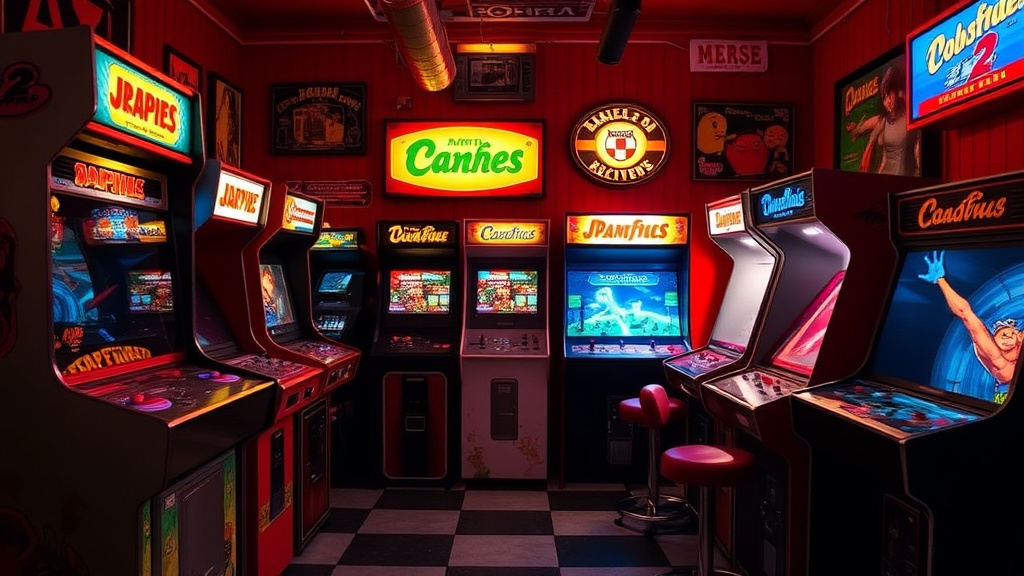
The Golden Age of Arcade Cabinets: Preserving Gaming History

This post covers the preservation techniques, investment considerations, and cultural significance of arcade cabinets from 1978 to 1986 — the period collectors widely recognize as the Golden Age. Whether you're considering your first cabinet purchase or looking to protect a growing collection, you'll find practical guidance on storage, maintenance, and authentication. Arcade preservation isn't just nostalgia; these machines represent industrial design at its most inventive, and their scarcity increases every year as original cabinets succumb to moisture, neglect, or amateur restoration attempts.
What Years Define the Golden Age of Arcade Games?
The Golden Age spans roughly 1978 through 1986 — beginning with Space Invaders and concluding as the industry crashed in North America. That eight-year window produced machines that collectors now chase with serious money: Pac-Man (1980), Donkey Kong (1981), Defender (1981), Centipede (1981), Dragon's Lair (1983), and Gauntlet (1985) among them. The hardware matters as much as the gameplay. These cabinets used discrete logic boards rather than the standardized JAMMA wiring that arrived later — meaning each machine had unique circuitry, hand-wired harnesses, and monitor configurations specific to that title.
That technical individuality makes preservation challenging. A Galaga boardset won't swap into another cabinet without modification. The specialized vector monitors in BattleZone or Tempest require technicians who understand obsolete CRT technology — and those people are retiring. Here's the thing: once that knowledge disappears, restoration becomes exponentially harder. Collectors aren't just preserving wood and silicon; they're maintaining a craft.
The Fredericton gaming community has seen this firsthand. Local collector circles (yes, they exist in New Brunswick) have tracked three complete Donkey Kong restorations over the past five years. Two succeeded. One failed when the original monitor chassis proved beyond repair — the owner couldn't source a replacement, and modern LCD retrofits destroyed the aesthetic value for serious buyers.
How Much Does a Restored Arcade Cabinet Cost in 2024?
Expect to pay between $800 for a working project cabinet and $8,000+ for mint-condition examples of marquee titles. Condition categories matter enormously in this market. Here's a breakdown of what you'll actually encounter when hunting:
| Condition Grade | Description | Price Range (Donkey Kong) | Price Range (Pac-Man) |
|---|---|---|---|
| Project/Non-Working | Original cabinet, missing parts, unknown monitor status, water damage possible | $800 - $1,400 | $600 - $1,000 |
| Player's Condition | Working, original side art faded or touched up, monitor functional but dim | $1,800 - $2,800 | $1,200 - $1,800 |
| Collector's Grade | Original art preserved, monitor rebuilt, minimal wear, documented history | $3,500 - $5,500 | $2,500 - $3,500 |
| Mint/Restored Original | NOS (New Old Stock) parts, professional monitor restoration, provenance known | $6,000 - $8,000+ | $4,000 - $6,000 |
These prices fluctuate based on location — shipping a 250-pound cabinet across Canada adds $400-$800 easily. That said, patience pays. Estate sales, warehouse liquidations, and rural auction houses occasionally surface forgotten machines at fractions of market value. Rosa's seen a Frogger cabinet sell for $200 at a Miramichi farm auction because nobody recognized what sat under the tarp.
The catch? Originality commands premiums that might surprise newcomers. A cabinet with replacement side art — even high-quality reproduction — typically sells for 30-40% less than one with factory graphics intact. Collectors care about authenticity. They'll scrutinize screw types, wood grain patterns, and the specific shade of T-molding around the edges. Reproductions aren't "wrong" — they're just valued differently.
Where Should You Store Arcade Cabinets to Prevent Damage?
Climate-controlled environments with stable humidity between 45-55% and temperatures ranging 18-22°C. Basements destroy cabinets. Garages kill them slowly. The MDF (medium-density fiberboard) used in most Golden Age cabinets absorbs moisture like a sponge, causing swelling, delamination, and the dreaded "sag" that makes doors stick and monitor bezels warp.
If you're serious about preservation, consider these storage priorities:
- Elevation matters: Even in finished basements, concrete floors wick moisture. Place cabinets on pallet risers or rubber matting — never directly on concrete.
- Monitor burn-in is permanent: CRT phosphors degrade when static images display too long. If you're running a cabinet regularly, use a screen saver or power management. Static attract screens (the "INSERT COIN" prompt) caused uneven wear that collectors now accept as "patina" — but it hurts value.
- Power cycling damages: The rush of current when flipping an arcade machine on creates thermal stress. Quality power conditioners (the Tripp Lite Isobar series remains the gold standard among collectors) filter surges and provide clean shutdown sequences.
- PCB corrosion spreads: Those original circuit boards use metal traces that oxidize in humid conditions. Desiccant packets inside the cabinet help, but they're no substitute for proper climate control.
Worth noting: sunlight fades side art faster than you'd expect. That vibrant Ms. Pac-Man pink turns salmon, then beige, with direct UV exposure. UV-filtering film on windows costs significantly less than professional art restoration (if you can even find someone who does it — This Old Game in California remains one of the few shops specializing in original arcade artwork reproduction).
The Monitor Problem Nobody Talks About
Original arcade monitors — specifically the Electrohome G07, Wells-Gardner 19K4900, and similar chassis — are failing at increasing rates. Capacitors dry out. Flyback transformers crack. The specialized high-voltage circuitry required to drive these displays wasn't designed for forty years of service.
Replacement options exist, but each carries tradeoffs:
- Original chassis repair: Requires skilled technicians. Expect $300-600 per monitor for recap and restoration services. The Killer List of Videogames maintains a directory of recommended repair specialists.
- Modern CRT replacement: Some collectors swap in compatible chassis from later arcade monitors. Functional, but purists notice the difference in color temperature and scan line appearance.
- LCD conversion kits: Companies like TTL arcade sell drop-in LCD panels. The image looks sharp — too sharp, some argue. Original arcade graphics were designed for the soft focus and phosphor glow of CRT technology. LCDs expose every pixel in ways that feel "wrong" to experienced collectors.
Rosa's advice? If the original monitor works, preserve it. If it's dead, repair beats replace. Only consider LCD as last resort — and accept that it will impact resale value.
How Can You Authenticate an Original Arcade Cabinet?
Documentation and factory markings separate authentic cabinets from converted or reproduction examples. The Golden Age saw widespread "conversion kits" — operators would buy cheap cabinets (often Pac-Man or Ms. Pac-Man machines, produced in massive quantities) and convert them to newer games when originals stopped earning. These conversions are legitimate history, but they're not "original" in the collector sense.
Authentication requires detective work:
- Serial numbers: Original manufacturers (Midway, Atari, Nintendo, Williams) stamped or labeled cabinets with production codes. Atari used paper labels that often disintegrated; Midway used metal plates. Cross-reference serial ranges with production records — the International Arcade Museum maintains databases.
- Wood construction: Original cabinets used specific plywood grades and joinery. Conversions often show secondary drilling, mismatched wood types, or painted-over artwork.
- Monitor bezels and glass: Original bezel art was screen-printed on the back of plexiglass or glass. Reproductions often use vinyl overlays or inferior printing methods that peel or fade differently.
- Control panels: Original overlays were screen-printed polycarbonate. Wear patterns should show consistent use — random damage or oddly placed wear suggests replacement.
The most telling indicator? Smell. Seriously. Original arcade cabinets from the Golden Age carry a distinct scent — old wood, aged electronics, decades of pizza grease and cigarette smoke absorbed into particle board. (The smoking ban arrived later, so many surviving cabinets reek of tobacco history.) Reproductions smell like Home Depot. Experienced collectors develop noses for this.
The Ethics of Restoration vs. Preservation
Collectors argue constantly about how much intervention is appropriate. Purists advocate "preservation conservation" — stabilize existing condition without replacement. Others support "restoration" — returning cabinets to factory-fresh appearance using reproduction parts.
Neither approach is wrong. Neither is universally right. The key is transparency. Selling a restored cabinet as "original" is fraud. Selling it as "professionally restored to factory specifications" is honest business. The vintage games community is small and talks constantly — reputations matter. Dealers who misrepresent condition get blacklisted at shows like the California Extreme arcade expo or the Midwest Gaming Classic.
For Fredericton collectors specifically, geography creates unique challenges. Maritime humidity demands dehumidification systems that collectors in Arizona never consider. Winter heating dries air to levels that crack wood. The seasonal swing — from 90% summer humidity to 20% winter dryness — stresses cabinets more than stable climates. Local collectors have developed homegrown solutions: marine-grade plywood repairs (borrowed from boat-building culture), extra-heavy climate control, and a network of parts trading that stretches from Halifax to Moncton.
The Golden Age won't last forever. Every year, cabinets deteriorate. Knowledge disappears. The collectors preserving these machines today — whether they own one battered Galaxian or a warehouse of rarities — are maintaining artifacts that shaped interactive entertainment. The wood, the wiring, the distinctive click of microswitches under authentic leaf-spring mechanisms — these details connect players to a specific moment in cultural history. Handle them with care. Question sellers aggressively. Document everything. And maybe, if you're lucky, you'll hear that power-on sound — the distinctive thump of a CRT warming up, the speaker hum, the synthesized voice inviting you to insert a coin — exactly as players experienced it in 1982.